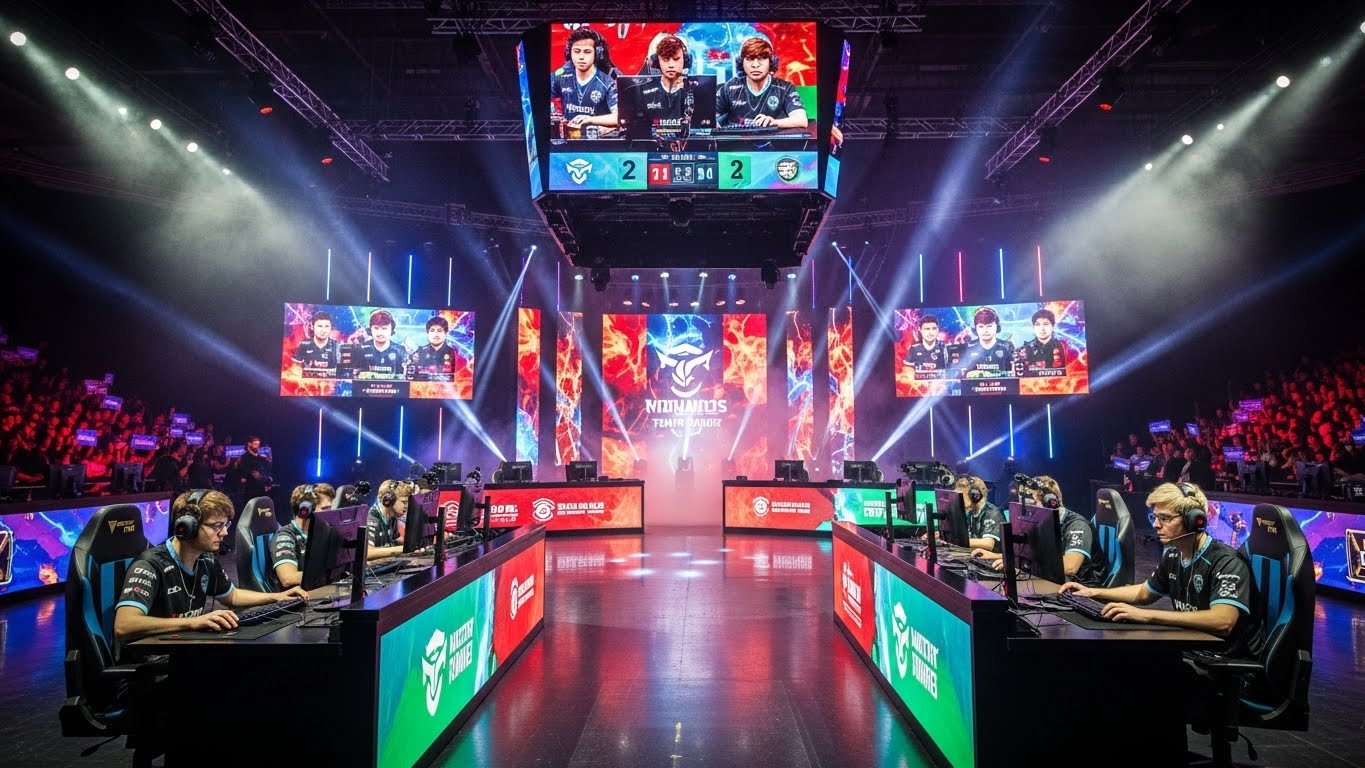
Esports has emerged as one of the fastest-growing forms of entertainment, capturing the attention of millions of viewers around the world. What was once a niche activity is now a booming industry with massive tournaments, professional leagues, and a dedicated global fanbase. As video games continue to evolve, so too does the landscape of competitive gaming, creating new opportunities for players, organizers, and fans alike. In this blog post, we will explore the history, growth, and future of esports, focusing on its transformation from a hobby to a multi-billion-dollar industry.
The Origins of Esports: From Arcade Games to Online Competitions
The story of esports dates back to the early days of video gaming. In the 1970s and 1980s, arcade games like Pong and Space Invaders set the stage for competitive gaming, though the competitions were more informal than what we see today. It wasn’t until the early 1990s that the first real organized gaming tournaments began to take shape. One of the most iconic early events was the Red Annihilation tournament in 1997, which featured the game Quake. This competition is widely regarded as one of the first esports events, offering a Ferrari as a prize for the champion.
As internet access became more widespread, online multiplayer games began to rise in popularity, enabling players to compete against each other across vast distances. By the late 1990s and early 2000s, games like StarCraft, Warcraft III, and Counter-Strike had become staples in the competitive gaming scene, particularly in countries like South Korea. The introduction of internet cafes in South Korea played a major role in popularizing esports, as players could meet in person and participate in tournaments, and the country quickly became a global hub for esports.
The Growth of Esports: The Turn of the 21st Century
The 2000s marked a period of rapid growth for esports, driven by the increasing accessibility of broadband internet and the rise of online gaming platforms. Competitive gaming began to attract larger audiences, and events started to feature bigger prize pools, drawing in sponsors and media attention. The launch of streaming platforms like Twitch in 2011 played a crucial role in elevating esports, giving players the ability to broadcast their gameplay to a global audience. In just a few years, Twitch became the primary hub for esports content, with millions of viewers tuning in to watch professional players and teams compete.
Around this time, game developers also began to realize the potential of esports as a way to engage players and increase the longevity of their games. Titles like League of Legends by Riot Games, Dota 2 by Valve, and Counter-Strike: Global Offensive by Valve all introduced competitive modes designed specifically for esports, featuring in-game leaderboards, official tournaments, and professional leagues. These games became the backbone of the modern esports scene, with international tournaments offering multi-million-dollar prize pools and drawing massive live audiences.
The rise of sponsorships from major brands like Coca-Cola, Intel, and Red Bull helped to legitimize esports, turning it into a profitable business. These sponsors not only supported major events but also partnered with professional teams and individual players, further professionalizing the industry. By the mid-2010s, esports had firmly established itself as a mainstream form of entertainment, attracting viewers, players, and investors from around the world.
The Structure of the Esports Industry: Teams, Tournaments, and Organizations
Esports is much more than just a collection of players competing in tournaments. The industry has become a well-organized ecosystem, with various stakeholders playing essential roles in its growth and success. Professional esports teams, organizations, broadcasters, and game developers all contribute to the development of the scene, and their roles have become increasingly sophisticated.
Professional Teams and Players
Professional esports players are the stars of the show, and much like athletes in traditional sports, they dedicate countless hours to training and competing. While the path to becoming a professional esports player is highly competitive, there are now more opportunities than ever before for young gamers to rise through the ranks. Many esports players start by competing in online tournaments, building their skills and reputation, before being recruited by established esports organizations. These organizations offer salaries, sponsorships, coaching, and training facilities to their players, allowing them to focus solely on their performance.
Esports teams are often specialized in specific games, with players representing their organizations in one or more competitions. The most successful teams have become household names in the esports world, and their fanbases are often just as passionate as those of traditional sports teams. Organizations like Team Liquid, Cloud9, T1, and FaZe Clan have established strong identities and attract loyal followings. These teams also help build the esports ecosystem by supporting not just players, but coaches, analysts, and content creators who contribute to the team’s success.
Tournaments and Leagues
Esports tournaments and leagues are the heart of the competitive gaming scene. Major tournaments such as The International (for Dota 2), League of Legends World Championship, and CS:GO Major Championships have become global spectacles, with millions of dollars in prize money up for grabs and thousands of spectators watching the action both in-person and online. These tournaments are often broadcast live on platforms like Twitch, YouTube, and Facebook Gaming, attracting millions of viewers from across the globe.
In addition to these international tournaments, many games have established their own professional leagues, such as the League of Legends Championship Series (LCS) and the Overwatch League (OWL). These leagues are typically organized into regional divisions, with teams competing throughout the year in a series of matches leading to the playoffs and finals. The format of these leagues mirrors that of traditional sports, with teams playing against each other in regular-season matches and vying for spots in the postseason.
Esports tournaments are not just about the competition; they are also entertainment events. Fans can watch live commentary, analysis, and even interact with players and fellow fans through social media and streaming platforms. The combination of high-level competition and immersive production makes esports events a unique and exciting experience for both players and viewers.
Game Developers and Publishers
At the core of esports are the games themselves, and game developers play an essential role in shaping the competitive gaming landscape. Titles like League of Legends, Overwatch, Dota 2, and Fortnite have become esports mainstays, and their developers continue to support their competitive scenes by hosting official tournaments, offering in-game rewards, and regularly updating the games with new content and balance changes.
Game publishers also help organize esports events and fund the competitive ecosystem. For example, Riot Games not only develops League of Legends but also manages the League of Legends World Championship and the LCS. This direct involvement in both development and competition has helped these companies foster thriving esports communities.
The Role of Streaming and Digital Media in Esports
One of the most significant factors behind the rise of esports is the growth of live streaming platforms. Services like Twitch, YouTube Gaming, and Facebook Gaming have provided esports fans with an easy way to watch their favorite players and teams in action. These platforms have revolutionized how esports is consumed, making it possible for anyone with an internet connection to watch live broadcasts of tournaments and events, no matter where they are in the world.
Streaming has also given rise to a new generation of content creators. Many professional players and streamers have built massive followings on platforms like Twitch, where they broadcast their gameplay, interact with fans, and showcase their personalities. These content creators have become stars in their own right, with some earning substantial incomes from donations, subscriptions, and sponsorships.
In addition to live streaming, digital media has played a crucial role in growing the esports industry. Social media platforms like Twitter, Instagram, and TikTok allow fans to engage with players and teams, sharing updates, memes, and behind-the-scenes content. Esports organizations also use social media to promote events, release news, and interact with their communities, fostering a deeper connection between fans and players.
The Future of Esports: New Frontiers and Global Expansion
As esports continues to grow, its future looks incredibly promising. The industry is constantly evolving, and new trends are shaping the way competitive gaming is experienced. One of the most exciting developments is the growing role of virtual reality (VR) and augmented reality (AR) in gaming. These technologies have the potential to create immersive, interactive esports experiences that could revolutionize how players compete and how fans watch the action.
Another significant trend is the increasing global reach of esports. While esports has traditionally been most popular in regions like North America, Europe, and Asia, it is now gaining traction in other parts of the world, including Latin America, the Middle East, and Africa. As more countries gain access to high-speed internet and gaming infrastructure, the global esports community will continue to expand, creating new opportunities for players, organizers, and fans alike.
In addition to the growth of traditional esports, the rise of mobile gaming is also making a major impact on the industry. Games like PUBG Mobile and Free Fire have gained massive popularity, particularly in regions where access to high-end gaming PCs or consoles is limited. Mobile esports tournaments are now being held on a global scale, and as mobile devices continue to improve, mobile esports will likely become an even more significant part of the esports ecosystem.
Finally, the future of esports will likely involve greater integration with traditional sports. We are already seeing sports teams and leagues investing in esports, either by acquiring esports organizations or establishing their own esports divisions. This crossover between traditional sports and esports could further propel the industry’s growth, attracting new fans and creating exciting new opportunities for collaboration and innovation.